
39th Precision Sheet Metal Technology Fair
Student's fabrication (20 entries)
- TOP
- Student's fabrication
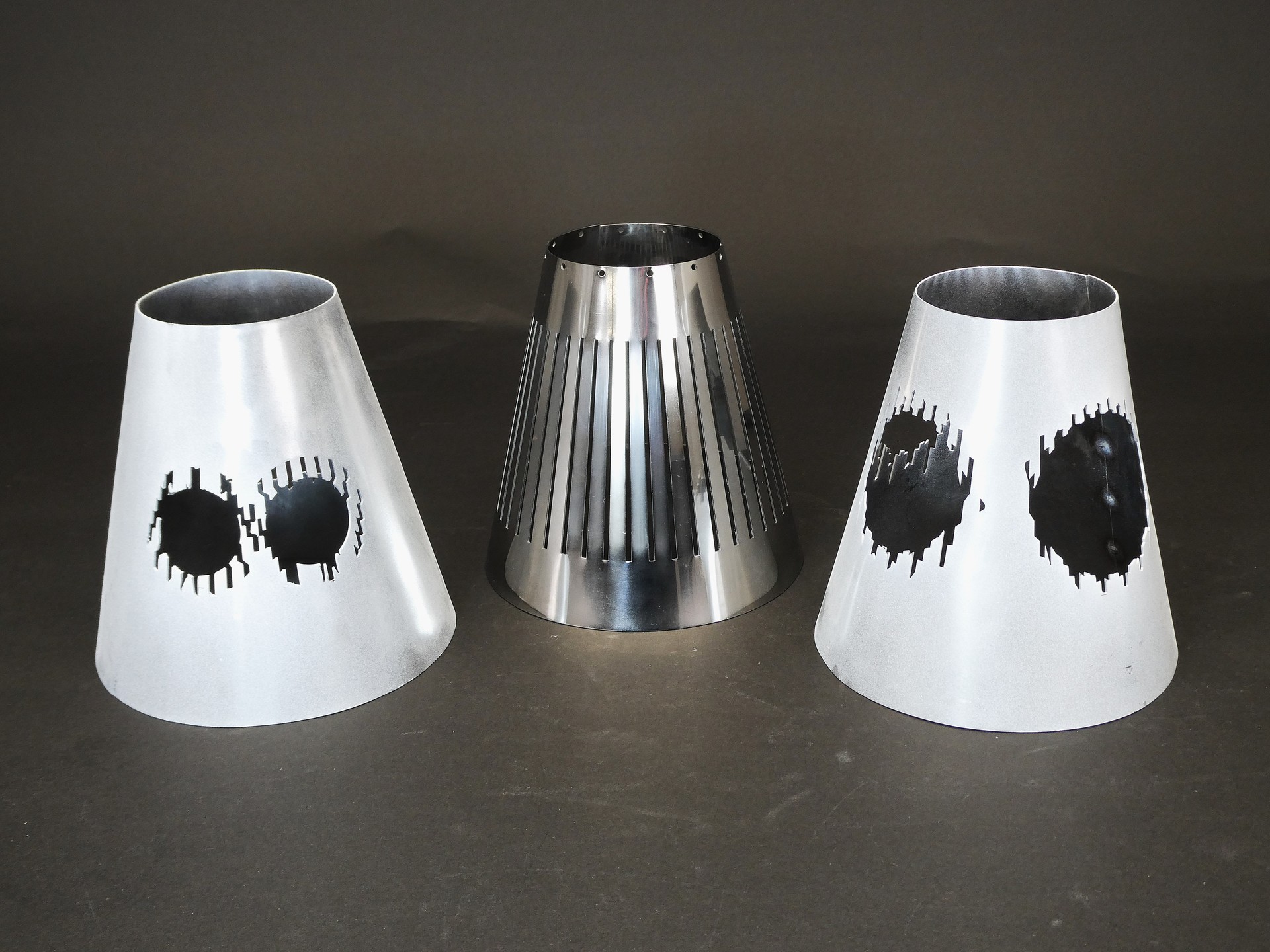
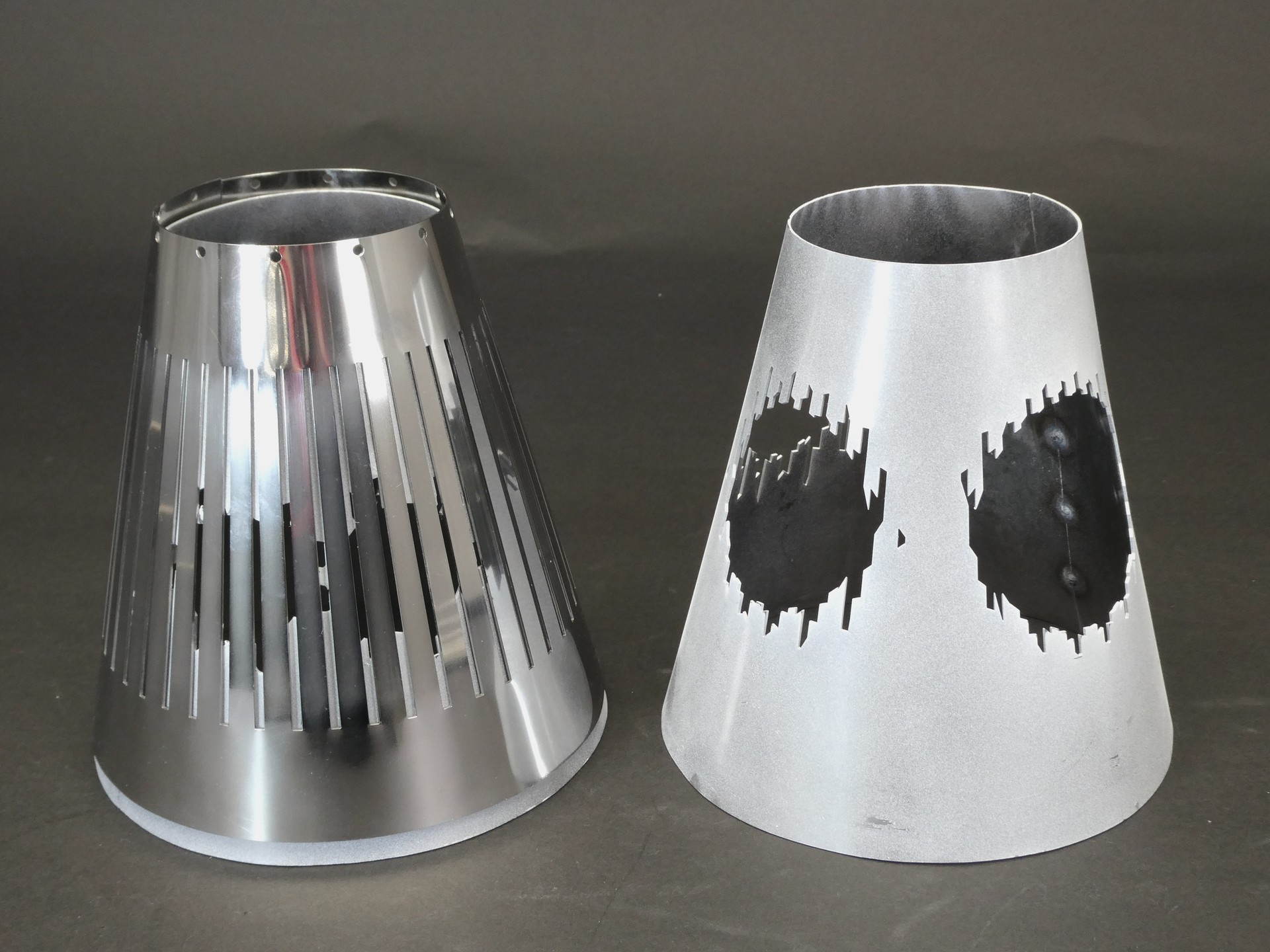
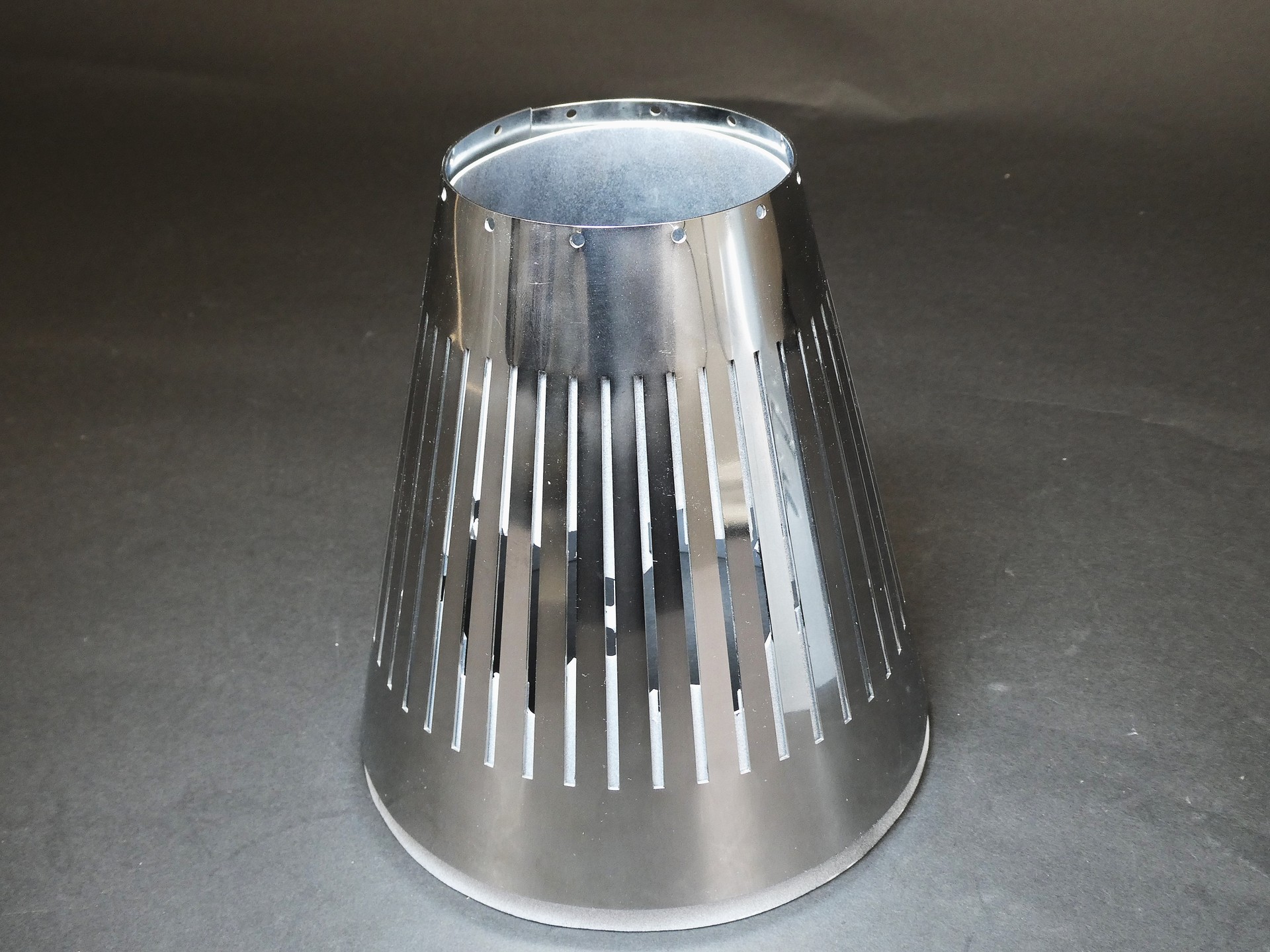
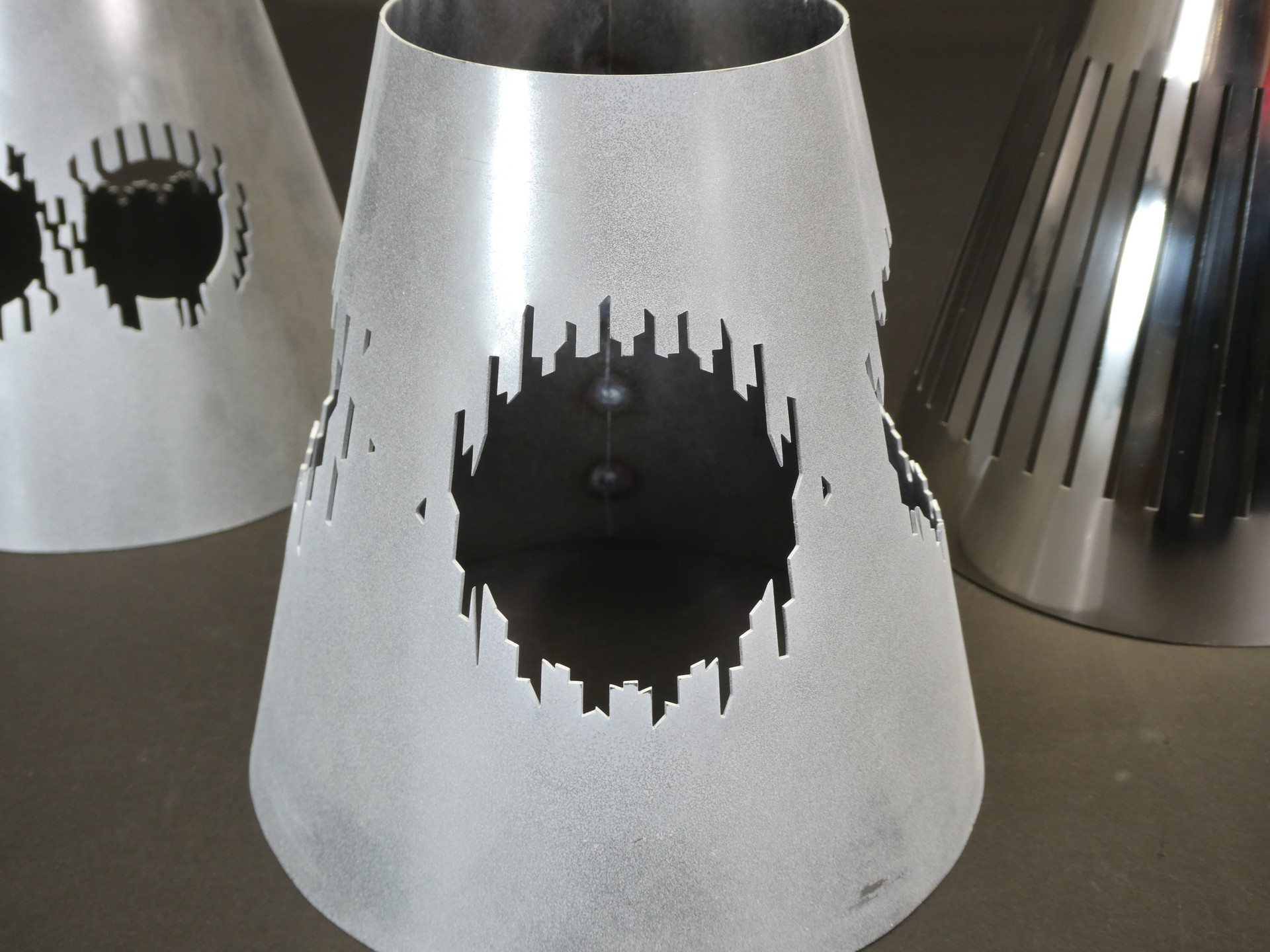
Rotating Conical Slit Animation (Students518)
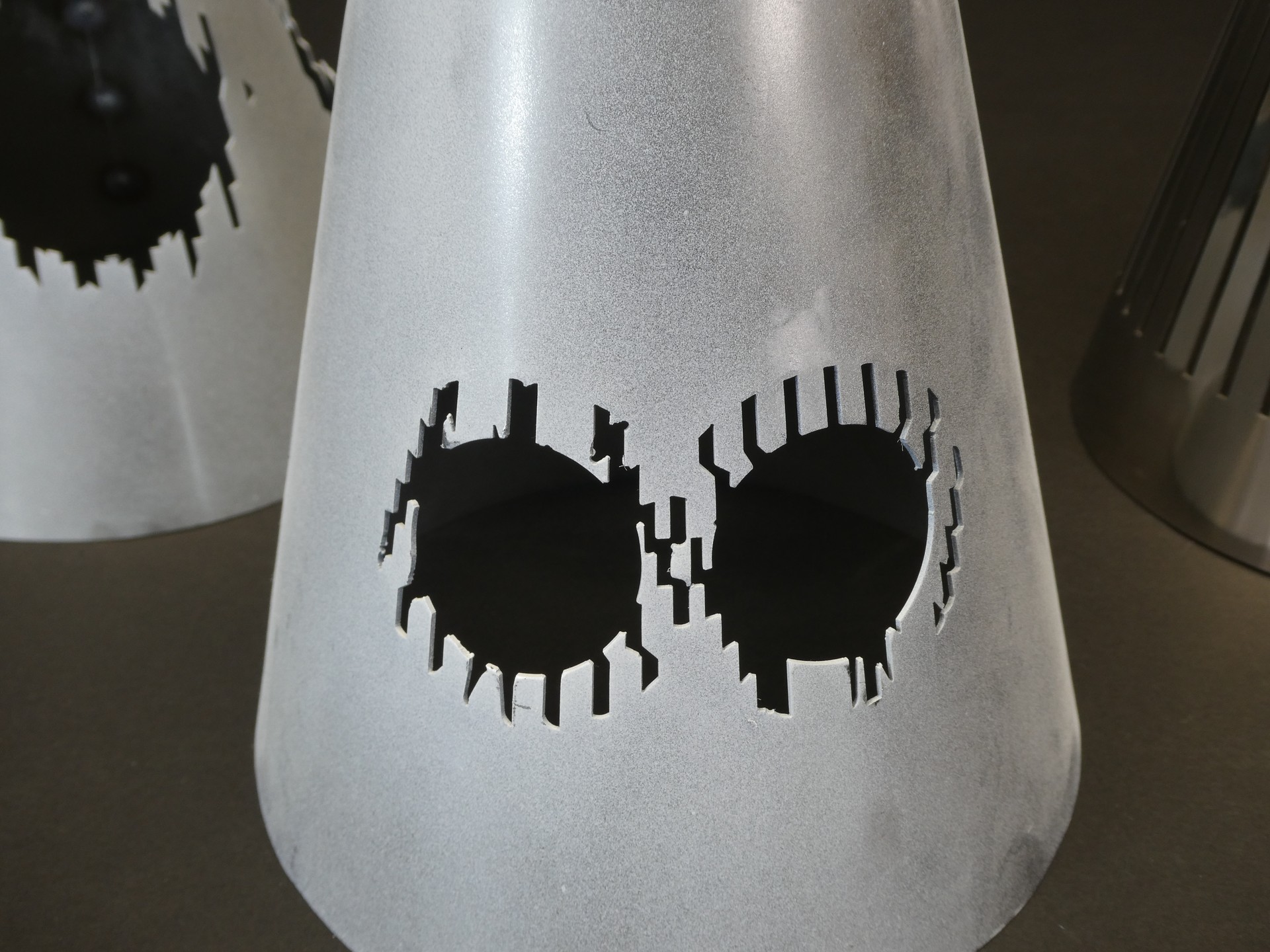
Students518
Rotating Conical Slit Animation
-
・Size: W320 x D300 x H160 mm
-
・Accuracy: ± 1 mm
・Programming time: 120 min
-
・Processing time: 240 min/quantity
・Quantity: 3
-
・Material: Stainless steel (SUS304)
-
・Thickness: 1.0 mm
-
・Type: Original work
Process
2D/3D Design
Unfolding
Laser-Cutting
Bending
Bending
Welding
Surface Finishing
Assembly
Strengths
Fabricated over three months by two seniors and one prospective student in the Plastic Working Laboratory, this work consists of one slitted cone and two pattern cones. Rotating one nested cone reveals shape transformations on Pattern Cone A (triangle to square to pentagon), while Pattern Cone B shows meshed gears turning and a spinning pentagon. Displaying this on conical surfaces—maintaining phase alignment and clearance along the entire perimeter—was the main challenge. Designed in AutoCAD, a truncated cone (top diameter 81 mm, bottom diameter 161 mm, height 160 mm) was unfolded into a sector with radial slits. Pattern frames were split by angle and interleaved. Laser-cut flat blanks were hand-beaten into cones with an 80 mm mandrel and wooden hammer, then rounded with 65 mm and 80 mm mandrels. Seams were gasless semi-automatic welded and belt-sanded. Circularity was verified with ring gauges to ensure smooth concentric rotation.
Reasons for choosing the theme: 平面の印刷物で知られるスリットアニメーションを、板金の展開・切断・曲げ・溶接で立体化できないかと考えた。回転で絵が動く円錐は、技能の高さと面白さを同時に伝えられると考えた。
Reasons for choosing the material: 約1年間の長期展示でもさびにくく、金属光沢で絵柄の動きが映えるSUS304を選んだ。板厚1.0mmは、細幅スリットを多数入れても円錐形状を保てる剛性を考慮して決めた。
Most important points: 円錐の展開は扇形となるため、スリットを放射状に配置し、絵柄の各コマもスリットと同じ角度ピッチで細片化して位相をそろえた点。回転させたときに絵柄が正しく動いて見えることを重視した。
Most difficult points: スリットや絵柄穴の有無で曲げ剛性が異なり、穴の位置で腰折れが生じやすかった。すべて手作業で、芯金(Φ80・Φ65)上で板をすべらせながら滑らかに曲げ、円形ゲージで真円を確認しつつ曲率をそろえた。
What I noticed when actually processed it from the drawing: 手加工でいきなり丸めると板の先端と後端に圧力がかからず平らな部分が残るため、先に端曲げを行った。また、Rが大きく腰折れが起きにくい下部(Φ160側)から先に曲げることが重要だと分かった。